Felix Quarkweather
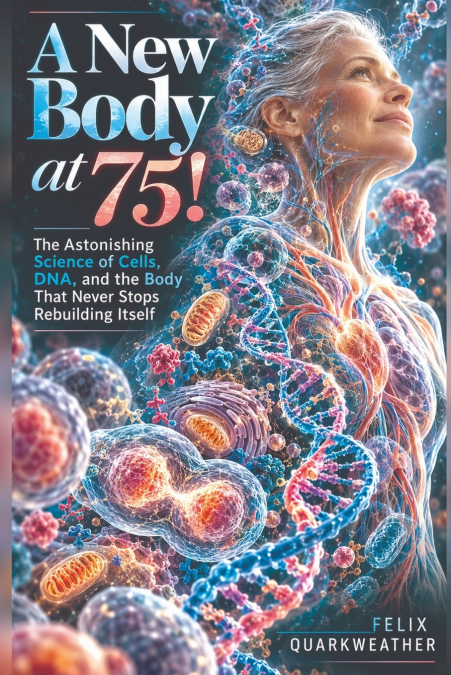
A human body can replace billions of cells in a day. So why does it still get old-and how does it remain you?Your body has never been a finished object. Blood cells come and go. The intestinal lining renews itself. DNA is copied, checked, repaired, and sometimes altered. Meanwhile, some neurons may accompany you for decades. There is no universal seven-year reset. The actual biology is far more extraordinary.In A New Body at 75!, Felix Quarkweather takes readers into the microscopic world that makes a human life possible. Discover what really happens during mitosis, how DNA instructions become living structures, why cells sometimes dismantle themselves on purpose, and what happens when their normal rules break down. Explore the surprising science of immune memory, stem cells, cancer, cellular aging, and regeneration-all explained with wit, clarity, and respect for the evidence.Along the way, you’ll encounter a remarkable scientific detective story: how traces of radioactive carbon from twentieth-century nuclear testing helped researchers estimate the ages of cells in the human body. You’ll meet red blood cells that cannot divide, nerve cells that may outlast most of their neighbors, and molecular repair crews working without your awareness.This accessible, research-informed journey is for anyone who has wondered how the human body works but doesn’t want a textbook. With vivid analogies, genuinely strange discoveries, clear scientific explanations, illustrations, and further reading, it invites you to consider one beautiful puzzle: at seventy-five, so much of your body has changed, yet your life has remained continuous.The question is not whether you get an entirely new body. The question is how something that never stops changing can remain recognizably itself.