Basic Equality

Basic Equality

Paul Sagar

33,45 €
IVA incluido
Disponible
Editorial:
Princeton University Press
Año de edición:
2026
Materia
Ética y filosofía moral
ISBN:
9780691256368
33,45 €
IVA incluido
Disponible
Añadir a favoritos

An innovative argument that vindicates our normative commitment to basic equality, synthesising philosophy, history, and psychologyWhat makes human beings one another’s equals? That we are "basic equals" has become a bedrock assumption in Western moral and political philosophy. And yet establishing why we ought to believe this claim has proved fiendishly difficult, floundering in the face of the many inequalities that characterise the human condition. In this provocative work, Paul Sagar offers a novel approach to explaining and justifying basic equality. Rather than attempting to find an independent foundation for basic equality, he argues, we should instead come to see our commitment to this idea as the result of the practice of treating others as equals. Moreover, he continues, it is not enough to grapple with the problem through philosophy alone—by just thinking very hard, in our armchairs; we must draw insights from history and psychology as well.Sagar writes that, as things stand, there appear to be no good arguments for believing in the truth of basic equality. Indeed, for much of Western intellectual history and social practice, basic inequality has been the default position. How is it then, Sagar asks, that in Western societies, in a period of less than a century, basic equality emerged as the dominant view? Sagar approaches this not as a mere philosophical puzzle, but as a dramatic historical development. In so doing, he shows us what is at stake when human beings treat one another as equals just because they are human beings.


Artículos relacionados

  • Ka Ab Ba Building The Lighted Temple
    Dr Terri R. Nelson / Dr Terri RNelson
    The book KaAbBa Building The Lighted Temple/Metaphysical Keys to the Tree of Life draws a circle that is inclusive of the Afrikan origin of the Ancient Kemetic/Egyptian wisdom. It reveals the undeniable root and link of Ancient Africa to all the religious systems that would develop worldwide. This book is explosive in its power to convey the meaning of KaAbBa, the Medu Neter  (...
    Disponible

    37,41 €

  • Technoethics and the Evolving Knowledge Society
    Rocci Luppicini
    Recently, there has been a major push to rediscover the ethical dimension of technology across the sciences, social sciences, and humanities. Technoethics and the Evolving Knowledge Society: Ethical Issues in Technological Design, Research, Development, and Innovation examines human processes and practices connected to technology embedded within social, political, and moral sph...
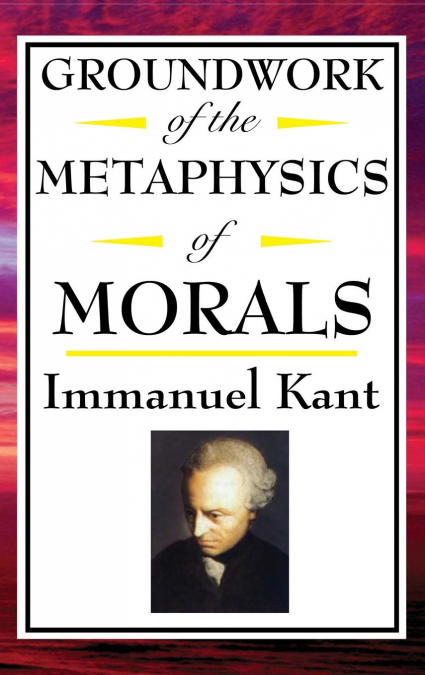
  • Kant
    Immanuel Kant
    Kant’s Groundwork of the Metaphysics of Morals is one of the most important works in modern moral philosophy. It belongs beside Plato, Aristotle, Machiavelli, and Hobbes. Here Kant sets out to articulate and defend the Categorical Imperative - the fundamental principle that underlies moral reasoning - and to lay the foundation for a comprehensive account of justice and human vi...
  • On the Duty of Civil Disobedience
    HENRY DAVID THOREAU
    Civil Disobedience argues that citizens should not permit their governments to overrule their consciences, and that they have a duty to avoid allowing their acquiescence to enable the government to make them the agents of injustice. Thoreau was motivated in part by his disgust with slavery and the Mexican-American War, but the sentiments he expresses here are just as pertinent ...
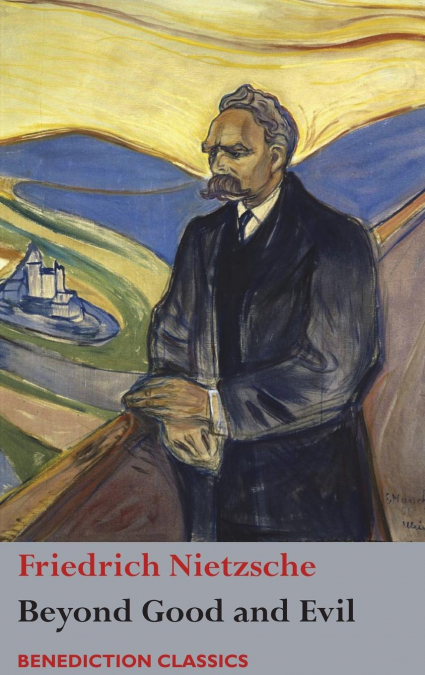
  • Beyond Good and Evil
    Friedrich Nietzsche
    Nietzsche, though primarily a philosopher, wrote widely on art, philology, history, religion, tragedy, culture, and science.  In 1886, at the height of his powers, he published Beyond Good and Evil.  Here he examines much of the best of human thought--dogmatic philosophy, Judeo-Christian morality, science and democracy – and finds it lacking.  Rejecting “slave-morality” he pres...
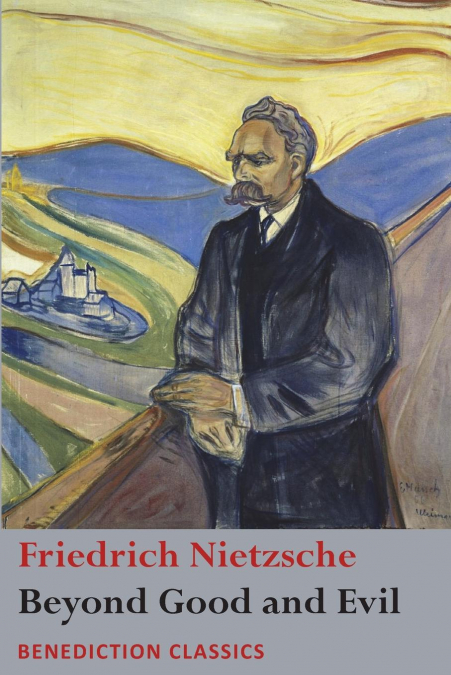
  • Beyond Good and Evil
    Friedrich Nietzsche
    Nietzsche, though primarily a philosopher, wrote widely on art, philology, history, religion, tragedy, culture, and science.  In 1886, at the height of his powers, he published Beyond Good and Evil.  Here he examines much of the best of human thought--dogmatic philosophy, Judeo-Christian morality, science and democracy – and finds it lacking.  Rejecting “slave-morality” he pres...
    Disponible

    9,99 €

Otros libros del autor

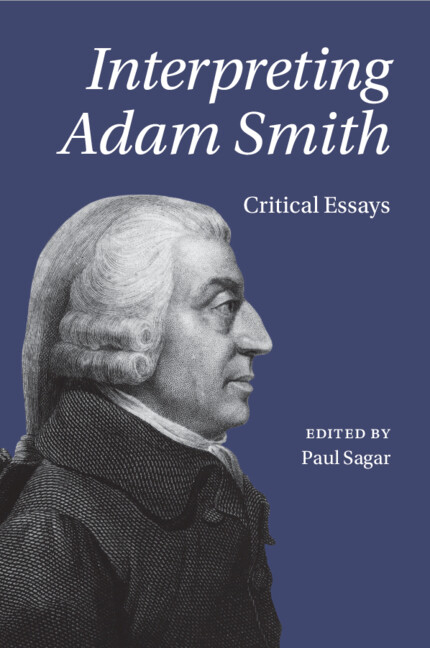
  • Interpreting Adam Smith
    Paul Sagar
    ...
    Disponible

    39,22 €

  • Adam Smith Reconsidered
    Paul Sagar
    A radical reinterpretation of Adam Smith that challenges economists, moral philosophers, political theorists, and intellectual historians to rethink him—and why he mattersAdam Smith has long been recognized as the father of modern economics. More recently, scholars have emphasized his standing as a moral philosopher—one who was prepared to critique markets as well as to praise ...
    Disponible

    32,19 €

  • The Opinion of Mankind
    Paul Sagar
    How David Hume and Adam Smith forged a new way of thinking about the modern stateWhat is the modern state? Conspicuously undertheorized in recent political theory, this question persistently animated the best minds of the Enlightenment. Recovering David Hume and Adam Smith’s long-underappreciated contributions to the history of political thought, The Opinion of Mankind consider...
    Disponible

    44,48 €