Inicio > Tecnología, ingeniería, agricultura > Ingeniería mecánica y de materiales > Ingeniería mecánica > Development and Characterization of TSP-Filled Basalt and Kenaf Fiber-Reinforced Epoxy Composites
Development and Characterization of TSP-Filled Basalt and Kenaf Fiber-Reinforced Epoxy Composites

Development and Characterization of TSP-Filled Basalt and Kenaf Fiber-Reinforced Epoxy Composites

Watkins Angelo

32,71 €
IVA incluido
Disponible
Editorial:
Indy Pub
Año de edición:
2026
Materia
Ingeniería mecánica
ISBN:
9798256290337
32,71 €
IVA incluido
Disponible
Añadir a favoritos

The development of fiber-reinforced polymer composites using natural fibers, mineral fillers, and thermosetting matrices is an important area of modern materials science and engineering. Development and Characterization of TSP-Filled Basalt and Kenaf Fiber-Reinforced Epoxy Composites provides a focused examination of composite material development involving basalt fiber, kenaf fiber, TSP filler, and epoxy resin. The book brings together composite materials engineering, natural-fiber reinforcement, polymer science, materials processing, mechanical characterization, and sustainable materials development within a structured technical framework.The book introduces the fundamental principles of fiber-reinforced polymer composites and explains the roles of the matrix, reinforcement, and particulate filler in determining composite structure and performance. Readers are introduced to important concepts such as fiber-matrix interaction, load transfer, reinforcement efficiency, filler dispersion, interfacial bonding, composite morphology, and material compatibility. These principles establish the foundation for understanding how different constituents contribute to the behavior of hybrid composite systems.A central focus is placed on basalt and kenaf fibers as reinforcing materials in an epoxy polymer matrix. Basalt fiber provides an inorganic reinforcement with distinctive mechanical and thermal characteristics, while kenaf represents a natural lignocellulosic fiber used in polymer composite systems. The book considers the characteristics of these reinforcement materials and examines how their incorporation into an epoxy matrix can influence the resulting composite structure and engineering properties.The role of TSP filler is also considered within the composite formulation. Particulate fillers can modify matrix behavior, interfacial characteristics, density, hardness, stiffness, and other material properties depending on their composition, particle characteristics, concentration, and distribution. The book discusses filler-matrix and filler-fiber interactions from a general materials-engineering perspective and considers the importance of achieving appropriate dispersion and interfacial compatibility.The book further examines composite fabrication and processing considerations. Topics such as material preparation, constituent proportions, fiber arrangement, filler incorporation, matrix preparation, curing, consolidation, and specimen preparation are discussed in relation to the development of reinforced epoxy composites. Attention is given to the relationship between processing conditions and the resulting composite morphology and properties.Characterization forms an important part of the study of hybrid composite materials. The text discusses general approaches for evaluating mechanical and physical behavior, including tensile response, flexural behavior, impact resistance, hardness, density, water absorption, wear-related characteristics, and microstructural features where relevant. These measurements provide a basis for relating composite composition and processing conditions to observable material performance.

Artículos relacionados

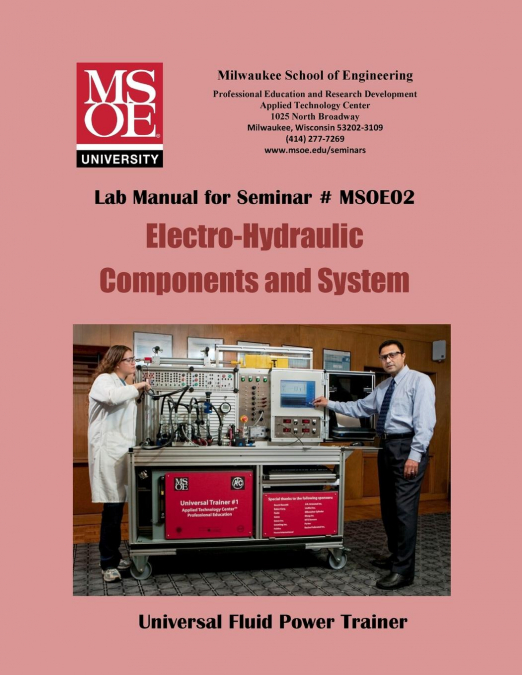
  • Lab Manual-MSOE02-UFPT
    Dr. Medhat Khalil / DrMedhat Khalil / Medhat khalil
    Universal Trainer Lab Manual associated with the text book HSV2 and course MSOE02 (Electro-Hydraulic Components and Systems). The manual contains lab numbers 20 to 29. It also contains instructions about the lab objectives, the devices used in the lab, the step-by-step procedure of the lab and the expected observations. ...
    Disponible

    27,55 €

  • Reliability in Power Electronics and Electrical Machines
    Hashem Oraee / Shahriyar Kaboli
    In modern industries, electrical energy conversion systems consist of two main parts: electrical machines and power electronic converters. With global electricity use at an all-time high, uninterrupted operation of electrical power converters is essential. Reliability in Power Electronics and Electrical Machines: Industrial Applications and Performance Models provides an in-dep...
  • Introduction to Engineering Design, Book 11, 4th Edition
    Jim Dally
    This book is the fourth edition of the eBook edition of the eleventh textbook in this series: Introduction to Engineering Design.  Jim Dally, working with College House Enterprises, LLC and faculty members in the Keystone Program within the Clark School of Engineering, has prepared ten previous textbooks in this series—a new one almost every 18 months.  These books are written ...
    Disponible

    79,79 €

  • EMBEDDED COOLING OF ELECTRONIC DEVICES
    IYENGAR MADHUSUDAN / JUSTIN A WEIBEL MEH MADHUSUDAN IYENGAR
    This book is a comprehensive guide on emerging cooling technologies for processors in microelectronics. It covers various topics such as chip-embedded two-phase cooling, monolithic microfluidic cooling, numerical modeling, and advances in materials engineering for conduction-limited direct contact cooling, with a goal to remedy high heat flux issues.The book also discusses the ...
  • Motorcycle Design
    James Sadauckas / Roberto Lot
    This book aims to provide the core concepts of motorcycle dynamics and illustrates their application in vehicle design to readers who have a serious interest in the subject and in particular engineers with a career path in the powered two wheelers sector. ...
    Disponible

    83,23 €

  • Advances in MEMS and Microfluidic Systems
    Microelectromechanical systems (MEMS) device applications are common in many areas. Micromirror arrays are used as video projectors; microsensors find their application for measuring acceleration, temperature, and pressure; and they can also be used in the medical field for measuring blood pressure. Microfluidics have also been widely employed in life sciences applications, suc...
    Disponible

    235,81 €