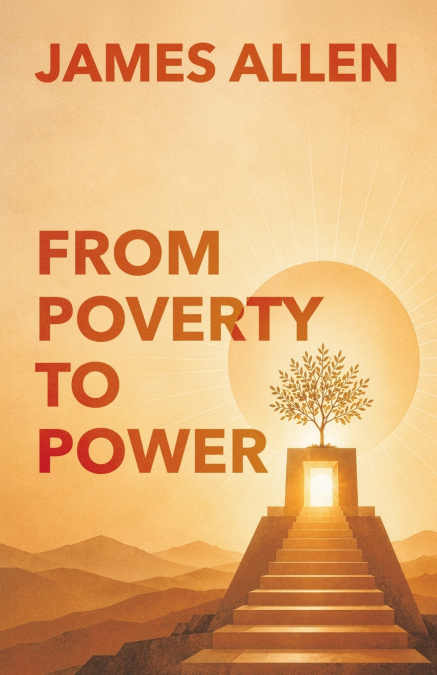
James Allen
James Allen’s From Poverty to Power is a searching guide to the relationship between thought, character, circumstance, and inner peace. First published in 1901, the book presents prosperity not simply as the accumulation of wealth, but as the result of disciplined thought, right conduct, self-mastery, and a life brought into harmony with deeper moral and spiritual principles.The work is divided into two complementary parts. In The Path of Prosperity, Allen examines the ways in which inner attitudes shape outward experience. He writes about adversity, mental discipline, health, happiness, success, and the power of directed thought, arguing that lasting improvement begins with the development of character rather than the pursuit of external rewards alone. Difficult circumstances, in Allen’s view, can become opportunities for self-examination and growth when they are met with patience, understanding, and purposeful action.The second part, The Way of Peace, carries these ideas further into the spiritual life. Allen turns to meditation, selflessness, love, service, and the search for lasting peace. True power, he argues, does not come from controlling others but from mastering selfish impulses, cultivating wisdom, and aligning one’s life with truth. The movement from 'poverty' to 'power' is therefore as much inward as outward: a journey from confusion, fear, and limitation toward clarity, strength of character, compassion, and peace.Throughout the book, Allen emphasizes personal responsibility while also insisting that genuine success cannot be separated from integrity. Thought matters because thought shapes character; character matters because it influences conduct; and conduct, repeated over time, gives direction to a life. Prosperity without peace is incomplete, just as ambition without self-discipline cannot provide lasting fulfillment.Written with the clarity and moral seriousness that would later make As a Man Thinketh a classic of inspirational literature, From Poverty to Power contains many of the ideas that became central to Allen’s philosophy. Its message reaches beyond financial success to address the larger question of how a person can live with greater purpose, usefulness, self-command, and inner freedom.For readers interested in personal growth, character development, meditation, and the power of disciplined thought, From Poverty to Power offers a thoughtful exploration of success understood not merely as something one acquires, but as something one becomes.