Inicio > Derecho > > Derecho del trabajo > Genetic Testing and the Governance of Risk in the Contemporary Economy
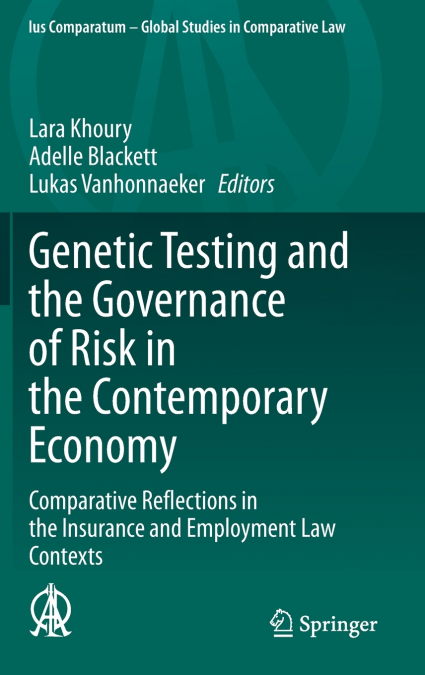
Genetic Testing and the Governance of Risk in the Contemporary Economy

Genetic Testing and the Governance of Risk in the Contemporary Economy


135,16 €
IVA incluido
Disponible
Editorial:
Springer Nature B.V.
Año de edición:
2020
Materia
Derecho del trabajo
ISBN:
9783030436988
135,16 €
IVA incluido
Disponible
Añadir a favoritos

This book addresses emerging questions concerning who should bear responsibility for shouldering risk, as well as the viability of existing and experimental governance mechanisms in connection with new technologies. Scholars from 14 jurisdictions unite their efforts in this edited collection to provide a comparative analysis of how various legal systems are tackling the challenges produced by the legal aspects of genetic testing in insurance and employment. They cover the diverse set of norms that surround this issue, and share insights into relevant international, regional and national incursions into the field. By doing so, the authors offer a basis for comparative reflection, including on whether transnational standard setting might be useful or necessary for the legal aspects of genetic testing as they relate to the insurance and employment contexts. The respective texts cover a broad range of topics, including the prevalence of genetic testing in the contexts of insurance and employment, and policy factors that might affect this prevalence, such as the design of national health or social insurance systems, of private insurance schemes or the availability of low-cost direct-to-consumer genetic testing. Further, the field of genetics is gaining in importance at the international and regional levels. Relevant concepts - mainly genetic tests and genetic data/information - have been internationally defined, and these definitions have influenced definitions adopted nationally. International law also recognizes a 'special status' for human genetic data. The authors therefore also consider these definitions and the recognition of the special status of human genetic data within regional and national legal orders. They investigate the range of norms that specifically address the use of genetic testing in employment and insurance, encompassing international sources - including human rights norms - that may be binding or non-binding, as well national statutory, regulatory and soft-law mechanisms. Accordingly, some of the texts examine general frameworks relevant to genetic testing in each country, including those that stem from general anti-discrimination rules and norms protecting rights to autonomy, self-determination, confidentiality and privacy. In closing, the authors provide an overview of the efficiency of their respective legal regimes’ approaches - specific and generalist - to genetic testing or disclosure of genetic information in the employment or insurance contexts, including the effect of lack of legal guidance. In this regard, some of the authors highlight the need for transnational action in the field and make recommendation for future legal developments.


Artículos relacionados

  • Handbook of Research on Unemployment and Labor Market Sustainability in the Era of Globalization
    The effective utilization of available resources is a pivotal factor for production levels in modern business environments. However, when resources are limited or in excess, this effects organizational success, as well as the labor market. The Handbook of Research on Unemployment and Labor Market Sustainability in the Era of Globalization is a comprehensive reference source for...
    Disponible

    321,77 €

  • Maritime Labour and the Use of Convenience Flags
    Euclécius Barbosa / Luis Ângelo Dallacort / Maira Tonial
    The aim of this work is to investigate the effects of the use of flags of convenience on the labour relations of seafarers. The phenomenon of globalisation has brought new economic thinking and with it states have started to relax their laws in favour of financial development. In the same vein, companies sought to increase their profits and began to invest in these countries, e...
    Disponible

    61,42 €

  • Decolonizando O Emprego
    Gabriela Bins Gomes Da Silva
    Este Livro Demonstra A Ausência De Neutralidade Do Sujeito Epistêmico Do Direito Do Trabalho A Partir De Um Olhar Decolonial Sobre As Margens Desprotegidas Desse Ramo Jurídico. A Pesquisa Apresenta Como Referenciais Teóricos Os Escritos Decoloniais E É Norteada Pelo Questionamento Acerca Da Possibilidade De Se Conciliar A Decolonização Da Proteção Jurídica Central Com A Valoriz...
    Disponible

    16,12 €

  • Direito Do Trabalho E Ecologia
    Rúbia Zanotelli de Alvarenga
    A Contemporânea Crise De Civilização – Que Aflige O Modo De Vida Capitalista, Industrial, Moderno E Ocidental – Reclama Que Todos Os Modos Para Enfrentamento De Seus Efeitos Deletérios À População Trabalhadora E Oprimida Sejam Empreendidos. A Proteção Jurídica No Âmbito Das Relações Assalariadas Não Faz Exceção, Inclusive No Que Se Refere A Um De Seus Particulares Traços Estrut...
    Disponible

    16,12 €

  • The Making of Labour Law in Europe
    Bob Hepple
    ...
    Disponible

    154,80 €

  • Novas Fontes Para O Direito Do Trabalho
    Francisco De Assis
    Um Livro A Serviço Da Sociologia, Antropologia, Filosofia Jurídica E Fonte Material Para O Direito Do Trabalho. Outrossim, Hermenêutico E Interdisciplinar No Que Tange, Dentre Outros, A Análise Semiótica E Dos Discursos Inerentes À Condição Humana Dos Trabalhadores Brasileiros. 10 ...
    Disponible

    16,12 €