Julia Wolbrook
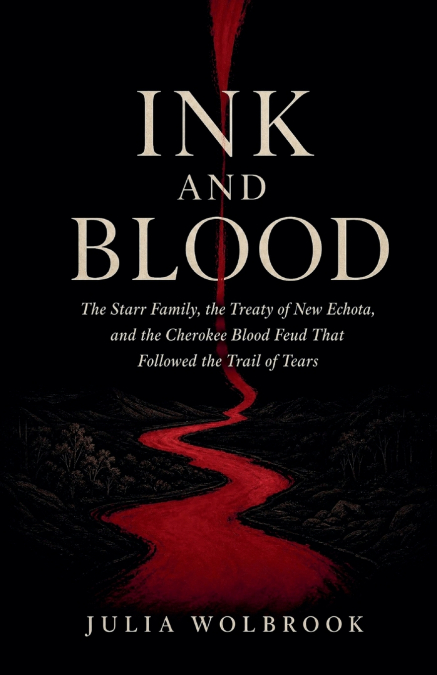
One signature. Three generations. A feud that bled across Indian Territory.On a winter night in 1845, two men slipped into a Cherokee politician’s home, found him asleep, and killed him in his bed. The murderers were brothers, and they were Starrs.To understand why, you have to go back seventy years, to a teenage Quaker trader who walked into the Cherokee mountains with an eye for profit and a conviction that his own people were destined to win the land. Caleb Starr married into the family of the legendary Beloved Woman Nancy Ward, prospered on a plantation worked by enslaved people, and spent the rest of his life urging the Cherokee to give up their homeland. The women of his own family stood before the National Council and called men like him 'our worst enemies.' He never listened.His son James Starr inherited the creed. In 1835, he signed the Treaty of New Echota, the document that set the Trail of Tears in motion. Four years later, the men who had signed it were being hunted across Oklahoma. The Ridges and Elias Boudinot were killed in a single morning. Then the survivors’ sons rode out to answer.Tom Starr, six feet five and smiling when he talked, became the most feared man in the Cherokee Nation. Legend hung a necklace of dried earlobes around his neck and a hundred killings on his name. His gang raided, burned, and vanished across the Arkansas line. The Cherokee police could not catch them. Then, on a Sunday in November 1845, a posse of Ross men rode to James Starr’s door.Ink and Blood is the first narrative history to put the Starr family at the center of the Cherokee Civil War. Drawing on letters, newspapers, emigration rolls, and oral histories, it separates fact from Wild West myths and asks whether the Starr gang were mere outlaws or political killers with a cause.