The Algorithm That Changed What You Believed

The Algorithm That Changed What You Believed

A.J. Harmon

45,12 €
IVA incluido
Disponible
Editorial:
Expedition Publishers
Año de edición:
2026
Materia
Estudios mediáticos
ISBN:
9798235043497
45,12 €
IVA incluido
Disponible
Añadir a favoritos

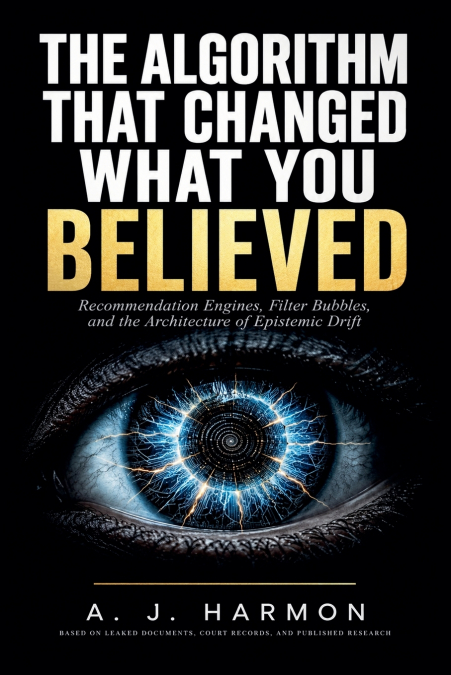
Right now, without your awareness, a piece of software is deciding what version of the world you see next.It is not a coincidence that your feed always seems to know exactly what will hold your attention. It is not luck that certain ideas feel more plausible than they did a year ago, or that the people who disagree with you seem increasingly unreasonable. These are the predictable outcomes of systems built to do one thing with extraordinary precision: keep you engaged, at any epistemic cost.THE ALGORITHM THAT CHANGED WHAT YOU BELIEVED is the definitive account of how recommendation engines, built to serve movies and shopping suggestions, became the most consequential shapers of human belief in modern history. Drawing on published academic research, leaked internal documents from major platforms, congressional testimony, and the rapidly evolving regulatory battles on three continents, A. J. Harmon takes readers inside the actual mechanics of how these systems work, and why their effects on what we believe are so difficult to detect from the inside.This is not a book about social media addiction. It is a book about architecture: the specific technical and commercial architecture that determines what billions of people encounter as information every day, and how that architecture, optimized for engagement rather than truth, creates the conditions for what the author calls epistemic drift, the slow, cumulative reshaping of belief through selection bias operating below the threshold of conscious awareness.You will learn how YouTube’s recommendation system became the subject of the most contested scientific debate in the history of platform research. You will follow the evidence trail from Facebook’s internal studies on teenage mental health to the landmark whistleblower testimony that changed global regulation. You will understand why false information spreads seventy percent faster than true information on social media, and why correction rarely undoes the damage. You will see how filter bubbles, echo chambers, and motivated reasoning interact with algorithmic feedback loops to produce a certainty that feels like insight but functions like a closed circuit.And you will find, in the book’s final chapters, what the best current evidence suggests actually works: the platform design changes, regulatory interventions, and individual habits that can, with sustained effort, begin to open the circuit.Authoritative, rigorously sourced, and written with the urgency of a subject that is reshaping democracy in real time, this is essential reading for anyone who has ever wondered why the world seems more divided, more certain, and more impervious to evidence than it did a decade ago. The algorithm did not change the world on purpose. But it changed it nonetheless.

Artículos relacionados

  • Impact of Communication and the Media on Ethnic Conflict
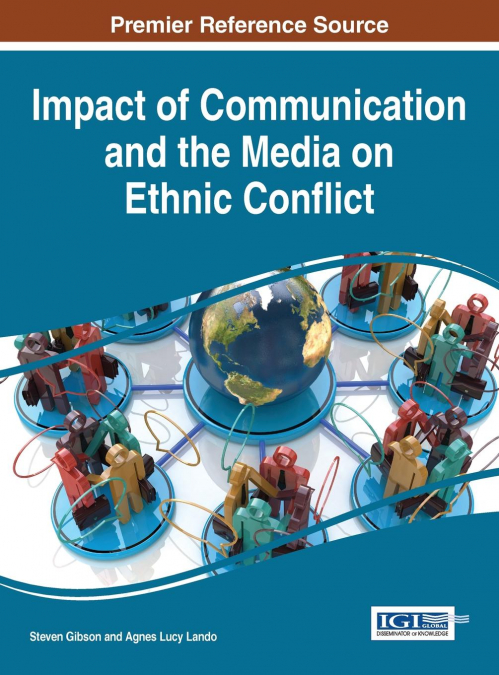
    Throughout the world, cultural and racial clashes remain a major hurdle to development and progress. Though some areas are experiencing successful intercultural communications which pave the way for peaceful negotiations, there are still many regions experiencing severe turmoil. Impact of Communication and the Media on Ethnic Conflict focuses on both the positive and negative o...
  • The Game to Show the Games
    Morgan Wick
    ESPN collects hundreds of millions of dollars in rights fees from cable subscribers, before selling a single advertisement. In The Game to Show the Games, Morgan Wick exposes how this lucrative revenue stream and the competition between media conglomerates has become a billion-dollar boon for sports leagues across the nation and the world, and how this has shaken up the rest o...
    Disponible

    9,42 €

  • Exploring the Benefits of Creativity in Education, Media, and the Arts
    The use of imagination can lead to greater outcomes in problem solving, innovation, and critical thinking. By providing access to creative outlets, productivity increases in schools, businesses, and other professional settings. Exploring the Benefits of Creativity in Education, Media, and the Arts is a pivotal reference source for the latest scholarly research on the stimulatio...
  • Celebrity, Pedophilia, and Ideology in American Culture
    Jason Lee
    Celebrity, Pedophilia, and Ideology in American Culture reveals the connections between rapacious capitalism and the rape of children. The twenty chapters, which span the analysis of childhood, celebrity culture, important books and films on pedophilia and violence, post-9/11 theology and public rhetoric, and killing for fame, in an interrelated fashion cover intrinsically impo...
  • Researching Digital Media and Society
    Moa Eriksson Krutrök / Simon Lindgren
    ...
    Disponible

    86,42 €

  • Researching Digital Media and Society
    Moa Eriksson Krutrök / Simon Lindgren
    ...

Otros libros del autor

  • Conflict of Interest, Signed in Pencil
    A.J. Harmon
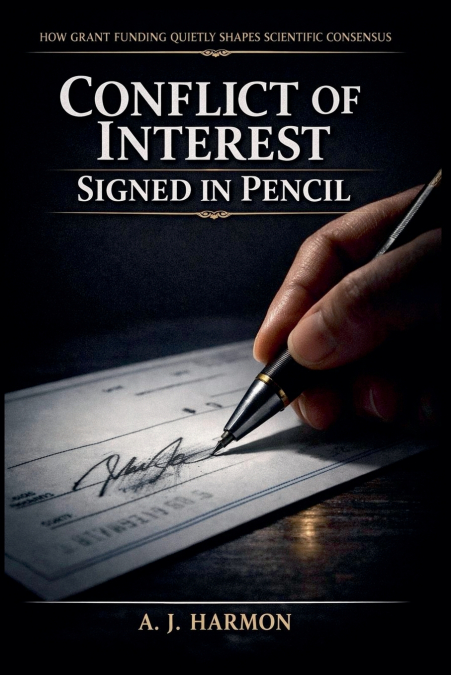
    The evidence was always real. The researchers were not dishonest. And yet the science was wrong - because the most powerful decisions in research happen before a single experiment begins.Conflict of Interest, Signed in Pencil is the definitive account of how commercial grant funding quietly reshapes scientific truth. Not through fabricated data or corrupt laboratories, but thro...
    Disponible

    43,21 €