Inicio > Humanidades > Filosofía > The Origin of Emergence
The Origin of Emergence

The Origin of Emergence

Daniel Paksi

99,26 €
IVA incluido
Disponible
Editorial:
Vernon Art and Science
Año de edición:
2026
Materia
Filosofía
ISBN:
9798261601258
99,26 €
IVA incluido
Disponible
Añadir a favoritos

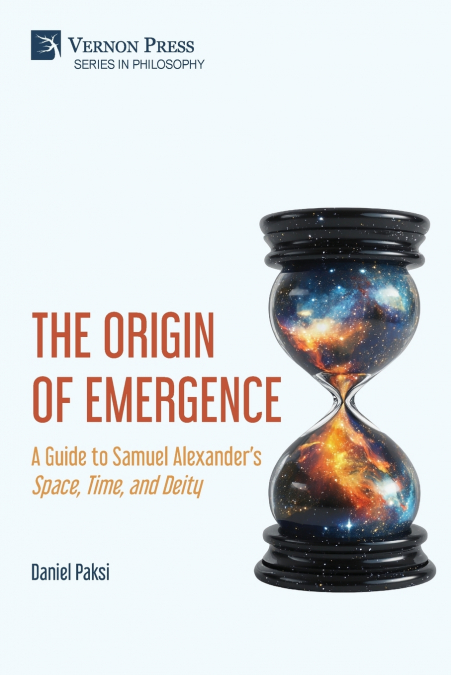
The universe evolves from a singularity of Space-Time. Life evolves from a singular replicative cell. Mind evolves in a singular living body in every individual case. We are living in an evolving universe. The concept of emergence tries to express the point of this process we can see everywhere. This is the reason that it has become so widespread both in philosophy and science. However, the use and meaning of the concept are quite different in the various fields; we have no real understanding of what the emergence of the universe or life means.The concept of emergence stems from Samuel Alexander’s ’Space, Time, and Deity’ (1920). However, no one reads Alexander anymore and thus no one is familiar with the original concept. On the contrary, we often use it in an exactly opposite sense. For example, Lee Smolin, a physicist, to propose a solution for the problems of contemporary physics, writes in his book ’Time Reborn’ that the only thing in the universe which is not emergent is Time. However, according to Alexander, we are living in an evolving universe because Time is emergent and the fundament of existence is Space-Time. Time is the ordering principle of change and emergence; there is nothing more.The universe starts with the first manifestation of Time in Space, that is, by a singularity of Space-Time. Matter, life, and mind are all unfolding developments of this process. Every thing or being in the universe is but an emergent spatiotemporal complex. We die because our (biological) time is, in the literal sense, gone.The goal of this book is to present the original concept of emergence in the twenty-first-century modern context, which no one has ever done before, and show that it is perfectly coherent with the scientific discoveries of the last century.

Artículos relacionados

  • Introduction to a Future Way of Thought
    Kostas Axelos / Kenneth Mills
    'Technologists only change the world in various ways in generalized indifference; the point is to think the world and interpret the changes in its unfathomability, to perceive and experience the difference binding being to the nothing.'Anticipating the age of planetary technology Kostas Axelos, a Greek-French philosopher, approaches the technological question in this book, firs...
    Disponible

    18,58 €

  • Capsule
    John Kenneth Press
    Join John and Adam as they wander the mean streets of Japan on a psychedelic fueled search for identity. While fun for the average reader, this book could also serve as a philosphy textbook because of its ordered exploration of sources of identity. Ultimately this trip through nationalist attacks, sex, and drugs, will take you to a better understanding of yourself and your pl...
    Disponible

    11,51 €

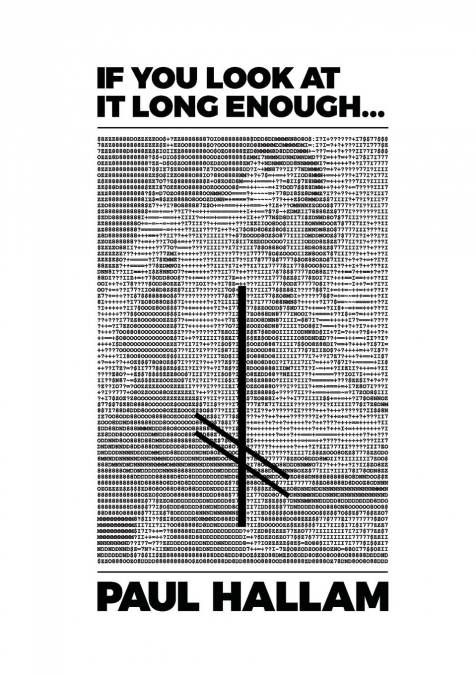
  • If you look at it long enough...
    Paul Hallam
    Originally written for an academic journal, If you look at it long enough... is primarily a personal account of Paul Hallam’s recollections of “self-abuse” through the consumption of porn over several decades. Challenging the familiar form of an “academic essay,” this autobiographical narrative raises several questions in relation to our contemporary morals related to sex in ge...
    Disponible

    11,30 €

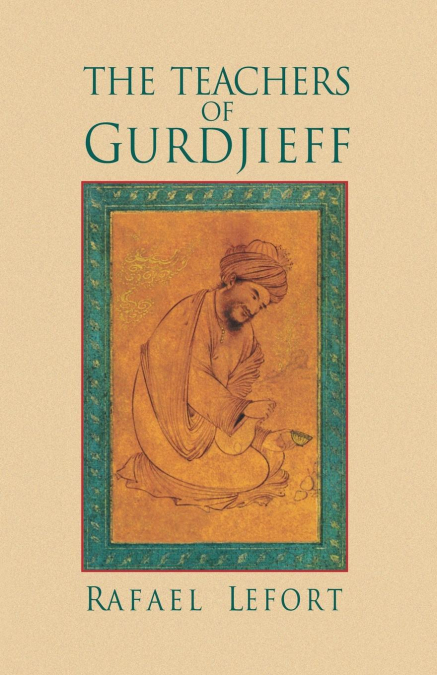
  • The Teachers of Gurdjieff
    Rafael Lafort / Rafael Lefort
    When The Teachers of Gurdjieff was first published more than 50 years ago, it made a considerable stir. George Ivanovich Gurdjieff had been one of the most famous mystics in the West in the first half of the 20th century - a teaching master who had many fashionable and influential pupils. He had a striking appearance and manner of teaching, and his teaching proved to be very in...
    Disponible

    20,45 €

  • Manifesto of the Communist Party
    Karl Marx
    The Communist Manifesto was first published on February 21, and it is one of the world’s most influential political tracts. Commissioned by the Communist League and written by communist theorists Karl Marx and Friedrich Engels, it laid out the League’s purposes and program. The Manifesto suggested a course of action for a proletarian (working class) revolution to overthrow the ...
  • The Art of Literature
    Arthur Schopenhauer
    Collected here are eight short essays, On Authorship, On Style, On the Study of Latin, On Men of Learning, On Thinking for Ones Self, On Criticism, On Reputation, On Genius, by the world renowned philosopher Arthur Achopenhauer. ...

Otros libros del autor

  • Personal Reality, Volume 2
    Daniel Paksi
    Western civilization was built on the concept of God. Today modern science, based on the critical method and so-called objective facts, denies even the existence of our soul. There is only matter: atoms, molecules, and DNA sequences. There is no freedom; there are no well-grounded beliefs. The decline of Western civilization is not the simple consequence of decadence, hedonism,...
    Disponible

    35,29 €

  • Personal Reality, Volume 2
    Daniel Paksi
    Western civilization was built on the concept of God. Today modern science, based on the critical method and so-called objective facts, denies even the existence of our soul. There is only matter: atoms, molecules, and DNA sequences. There is no freedom; there are no well-grounded beliefs. The decline of Western civilization is not the simple consequence of decadence, hedonism,...
  • Personal Reality, Volume 1
    Daniel Paksi
    Western civilization was built on the concept of God. Today modern science, based on the critical method and so-called objective facts, denies even the existence of our soul. There is only matter: atoms, molecules, and DNA sequences. There is no freedom; there are no well-grounded beliefs. The decline of Western civilization is not the simple consequence of decadence, hedonism,...
    Disponible

    31,99 €

  • Personal Reality, Volume 1
    Daniel Paksi
    Western civilization was built on the concept of God. Today modern science, based on the critical method and so-called objective facts, denies even the existence of our soul. There is only matter: atoms, molecules, and DNA sequences. There is no freedom; there are no well-grounded beliefs. The decline of Western civilization is not the simple consequence of decadence, hedonism,...