The Second Layer

The Second Layer

Michiel Arens

24,89 €
IVA incluido
Disponible
Editorial:
Jupiter Holding
Año de edición:
2026
Materia
Informática: cuestiones generales
ISBN:
9789403881348
24,89 €
IVA incluido
Disponible
Añadir a favoritos

The Second Layer introduces a fundamental shift in how professionals and organizations manage digital information. It argues that the real problem of modern knowledge work is not the volume of information, but the outdated structure used to organize it.For decades, file systems have relied on hierarchical folders-an approach inherited from physical filing cabinets. While effective for basic storage, this model struggles in today’s environment of overlapping projects, cross-functional collaboration, and rapidly changing priorities. Documents no longer belong to a single category; they exist within multiple contexts simultaneously. Forcing them into one location creates friction, duplication, and lost insight.The book’s central thesis is that hierarchy is not wrong-but it is no longer sufficient.To address this limitation, the author introduces the concept of a 'second layer': contextual tagging. While folders answer the question 'Where does this belong?', tags answer 'What is this related to?'. By assigning multiple contextual attributes to documents-such as project, client, stage, or theme-information becomes accessible through many entry points instead of a single path.This shift transforms file systems from static storage structures into dynamic knowledge networks. Retrieval becomes faster and more intuitive, because it aligns with how the human brain works: through association rather than strict categorization. Instead of remembering where a file was stored, users can find it based on what they remember about it.The book combines theory and practice to build a compelling case. Drawing on cognitive science, network theory, and knowledge management research, it explains why tagging reduces cognitive load, improves recognition-based retrieval, and reveals connections across organizational boundaries. It shows how traditional folder systems conceal patterns, while contextual tagging makes them visible.Beyond theory, The Second Layer provides a practical roadmap for implementation. It introduces a simple, scalable tagging framework based on a few core dimensions (such as entity, initiative, time, and status), and emphasizes gradual adoption rather than disruptive change. Readers learn how to integrate tagging into daily workflows, avoid over-complexity, and build habits that make the system sustainable.At an organizational level, the implications are significant. Tagging enables greater transparency across projects, improves audit and compliance readiness, and reduces the need for constant restructuring of folder systems. It also lays the foundation for more advanced capabilities, including AI-driven insights, since structured metadata is essential for intelligent systems.Importantly, the book does not advocate abandoning existing tools. Instead, it positions tagging as a complementary layer that connects fragmented systems-such as file drives, cloud platforms, and enterprise content management tools-into a more coherent whole.Ultimately, The Second Layer reframes tagging from a minor feature into a form of architectural modernization. It challenges leaders, project managers, and knowledge workers to rethink how information is structured, retrieved, and understood.In a world where work operates as a network of relationships rather than a simple hierarchy, the systems we use must reflect that reality. By combining hierarchical stability with contextual flexibility, the second layer offers a more accurate, efficient, and future-proof way to manage knowledge. 6

Artículos relacionados

  • Interview with Jeffery Khoury, Bringing Telemedicine to the People
    Richard G Lowe Jr
    Did you know you can consult with a medical specialist over your smartphone from the comfort of your own home? Imagine speaking to a highly-trained and accredited doctor about whatever is ailing you from virtually anywhere in the world.Thanks to a young entrepreneur named Jeffery Khoury, you can get the advice you need from a pool of medical specialists without waiting in a doc...
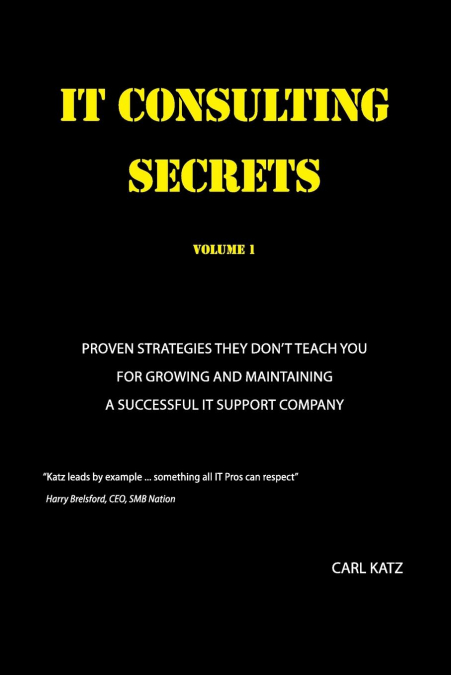
  • IT Consulting Secrets
    Carl A Katz
    This book is for IT consultants of all experience levels and the content is relevant to any IT support business model from managed services (MSP) to break/fix. The author has methodically compiled these strategies and this information from over sixteen years of experience working in the IT support field at the small and medium sized business and enterprise levels. ...
    Disponible

    29,41 €

  • Modeling, Analysis, and Applications in Metaheuristic Computing
    Peng-Yeng Yin
    The engineering and business problems the world faces today have become more impenetrable and unstructured, making the design of a satisfactory problem-specific algorithm nontrivial. Modeling, Analysis, and Applications in Metaheuristic Computing: Advancements and Trends is a collection of the latest developments, models, and applications within the transdisciplinary fields rel...
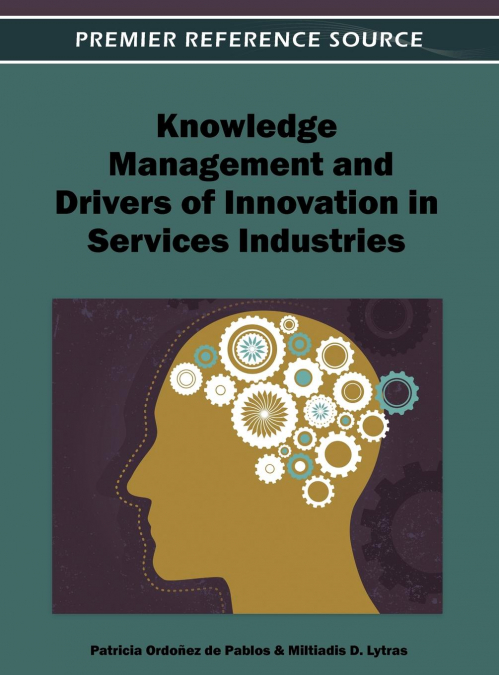
  • Knowledge Management and Drivers of Innovation in Services Industries
    Knowledge Management is concerned with all aspects of eliciting, acquiring, modelling, and managing knowledge. Application of knowledge resources successfully helps the organization to deliver creative products and services. Especially in service business, service job experience and information about the customer, as well as the installed site equipment, are key factors to deli...
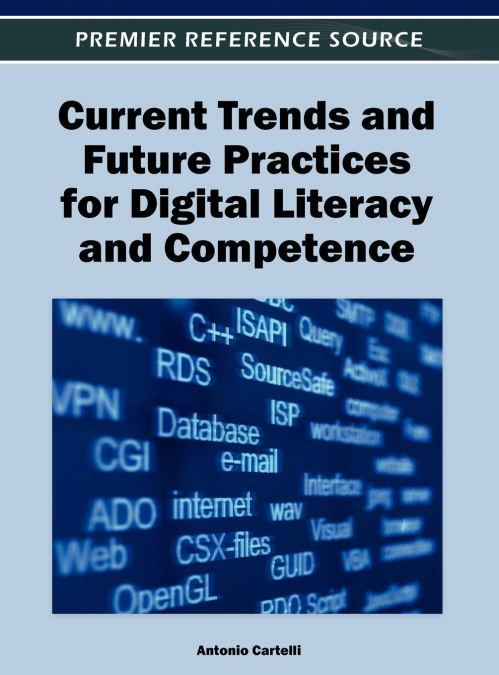
  • Current Trends and Future Practices for Digital Literacy and Competence
    Antonio Cartelli
    Being a digital citizen has transformed from a process of familiarizing ones’ self with terminology and techniques to a full-time responsibility in the hands of any who want to stay abreast of the latest technological change in their respective field. Current Trends and Future Practices for Digital Literacy and Competence offers a look at the latest research within digital lite...
  • Human Rights and Risks in the Digital Era
    Globalization, along with its digital and information communication technology counterparts, including the Internet and cyberspace, may signify a whole new era for human rights, characterized by new tensions, challenges, and risks for human rights, as well as new opportunities. Human Rights and Risks in the Digital Era: Globalization and the Effects of Information Technologies ...

Otros libros del autor

  • The Theory of Inner Organization
    Michiel Arens
    The Theory of Inner OrganizationThe Theory of Inner Organization is a multidisciplinary framework that explores how the invisible organization within human beings continuously shapes the visible organization of their work, relationships, projects, institutions and society.For centuries, we have studied organizations primarily from the outside. We have developed management theor...
    Disponible

    48,24 €

  • Work Smart, Be Happy; The Foundation
    Michiel Arens
    This book presents a new foundation for sustainable leadership by shifting focus from external results to inner alignment. Rather than offering techniques, it explores the internal state from which effective leadership naturally arises.At its core is the concept of effortlessness-not as doing less, but as acting without inner friction. Effortlessness emerges when four inner cap...
    Disponible

    24,22 €