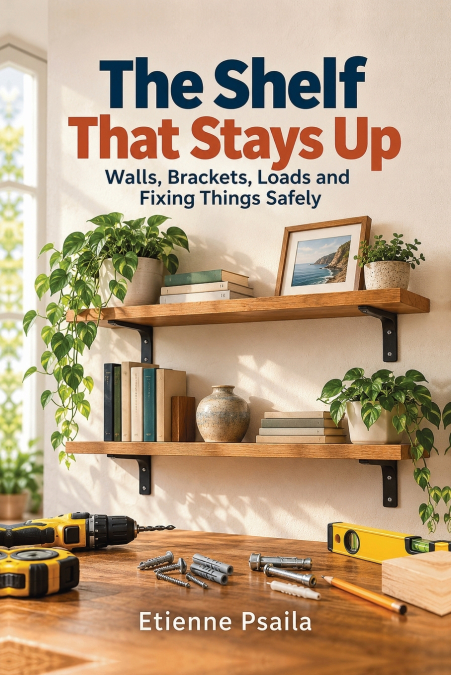
Etienne Psaila
A shelf may look simple, but keeping it securely attached to a wall involves more than choosing a board and tightening a few screws. Why do some shelves sag while others stay straight? What makes one bracket suitable for a particular load but another inadequate? How do plasterboard, brick, concrete and hollow walls change the way a shelf should be supported? And why can a deep shelf place unexpected demands on its fixings? The Shelf That Stays Up takes readers through the practical principles behind dependable household shelving. From shelf materials, bracket shapes and support spacing to wall anchors, load ratings and concealed floating-shelf supports, Etienne Psaila explains how the individual components work together. Written for beginners and homeowners, this accessible guide also examines the weight of everyday objects, common installation mistakes, warning signs of deterioration and the situations in which professional assistance is the safer choice. Whether planning a bookshelf, organising a kitchen, adding garage storage or understanding an existing installation, readers will gain the knowledge to make more informed decisions about shelves and the walls that support them. A practical guide to understanding what holds a shelf up - and what can cause it to come down. Disclaimer: This book provides general educational information, not project-specific structural or safety certification. Always follow applicable regulations and manufacturer instructions, and consult qualified professionals where necessary. Product names and trademarks, where mentioned, belong to their respective owners. No affiliation or endorsement is implied.