Virginia Woolf
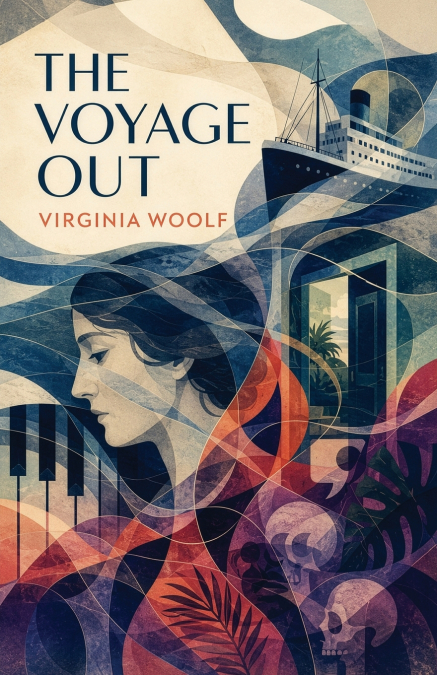
Rachel Vinrace has reached adulthood with little knowledge of the world beyond her father’s home and the music she plays with passionate concentration. When she sails from England aboard the Euphrosyne, the voyage unsettles the boundaries of her sheltered life. Among the passengers are Richard and Clarissa Dalloway, whose confidence, politics, and social ease expose Rachel to forms of experience she has barely imagined.The voyage eventually brings Rachel to the fictional South American town of Santa Marina, where she stays with her aunt Helen Ambrose. Around a hotel community of English travelers, expatriates, intellectuals, and would-be reformers, Rachel begins an education no formal instruction has provided. Conversations about art, marriage, empire, gender, and freedom reveal both the possibilities of adult life and the complacencies of the society from which she comes. Woolf’s comedy is sharpest when characters speak most confidently about people and places they do not understand.Rachel’s developing friendship with Terence Hewet opens a more intimate discovery. Their attraction grows through talk, uncertainty, resistance, and recognition, giving Rachel a first experience of love while forcing both to confront what marriage might demand. Her awakening is not a simple escape from innocence into certainty. The wider world offers exhilaration, confusion, beauty, and danger in equal measure.First published in 1915, The Voyage Out is Virginia Woolf’s first novel. Its conventional chapters, large social cast, travel setting, and romantic plot already contain concerns that would define her later work: the difficulty of knowing another person, the hidden life of women, unstable social identity, and moments when consciousness suddenly expands. The novel also features an early incarnation of Clarissa Dalloway, a character Woolf would later radically develop in Mrs. Dalloway.Expansive, ironic, and ultimately tragic, The Voyage Out turns a journey away from England into a searching exploration of entering experience. Rachel travels toward love and self-knowledge, but Woolf refuses the easy assurances of a conventional coming-of-age story, revealing how fragile every imagined future can be.