Edward Step
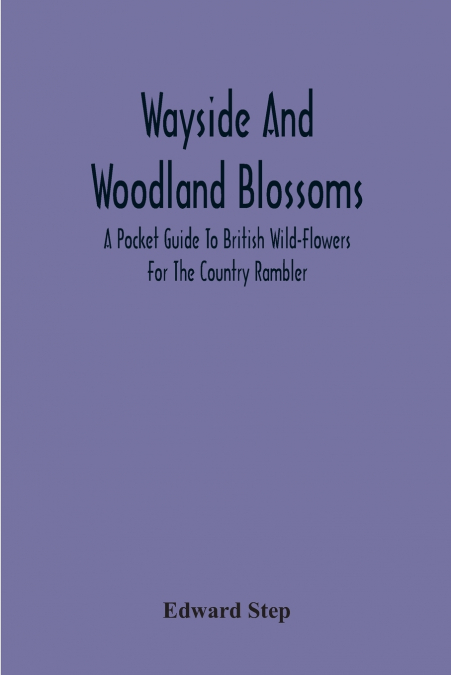
Discover Britain’s roadside and woodland blossoms anew. Perfect for curious country ramblers.Edward Step’s Wayside And Woodland Blossoms: A Pocket Guide To British Wild-Flowers For The Country Rambler unfolds as a compact, hands-on British wildflower guide from the late Victorian and early Edwardian era. Part pocket nature book, part field identification manual, it brings native British blossoms and everyday wild plant species into immediate reach with short, observation-led entries and accessible labelling. The book reads like a patient companion on the path: habit and habitat are noted alongside key visual cues, and an illustrated plant reference sensibility helps readers match leaves and blooms quickly. Its language is approachable rather than technical, a quality that makes the countryside rambler flora intelligible to newcomers while still rewarding seasoned amateurs. As a document of natural history, it captures an older countryside sensibility - a record of Victorian era botany transitioning into Edwardian countryside plants - and preserves the manner in which late-nineteenth-century observers taught identification by sight and memory. Brief, memorable entries and an emphasis on sight-based recognition make the guide superb for use on the move, whether learning familiar roadside blooms or seeking less-common native British blossoms; the result is both practical and quietly evocative.Out of print for decades and now republished by Alpha Editions. Restored for today’s and future generations. More than a reprint - a collector’s item and a cultural treasure. It sits equally well in a rucksack and on a shelf: an outdoor exploration companion for modern walks, a handy wildflower field guide for family outings, and a thoughtful nature enthusiasts gift for anyone who loves British flora. Casual readers will enjoy its readable, conversational tone; classic-literature collectors and connoisseurs of period natural history will prize its period voice and provenance. A measured revival of a beloved field guide, it rewards both casual observers and those building a curated library of countryside literature.