MD Ishikawa Fujimoto
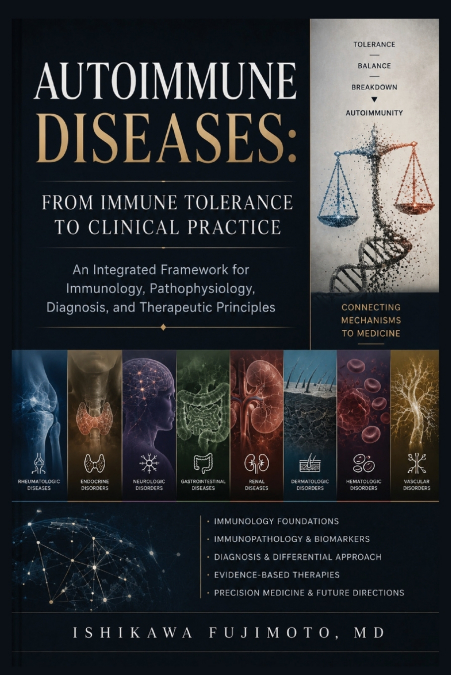
Autoimmune diseases affect virtually every organ system, yet they share a common biological foundation: the breakdown of immune tolerance. Whether the disease manifests as rheumatoid arthritis, systemic lupus erythematosus, multiple sclerosis, autoimmune thyroid disease, or autoimmune encephalitis, the underlying process reflects a failure of the immune system to distinguish self from non-self. Recognizing these shared mechanisms is essential to understanding autoimmune pathology, making accurate diagnoses, and selecting effective therapies.Autoimmune Diseases: From Immune Tolerance to Clinical Practice presents autoimmune medicine through a unified, mechanism-based framework that connects foundational immunology with clinical practice. Rather than examining autoimmune disorders as isolated diseases, the book demonstrates how common immunological principles explain disease development, clinical presentation, diagnostic evaluation, and therapeutic decision-making across the full spectrum of autoimmune conditions.The text begins with the organization of the immune system and the mechanisms that maintain self-tolerance before examining the genetic, environmental, hormonal, microbial, and epigenetic factors that disrupt immune homeostasis. It then explores the immunopathological processes responsible for tissue injury-including autoantibodies, T-cell and B-cell dysregulation, cytokine signaling, complement activation, and chronic inflammation-and translates these concepts into practical clinical application through evidence-based approaches to diagnosis, biomarker interpretation, and treatment.Topics include:Innate and adaptive immunity, immune tolerance, and the mechanisms of autoimmune diseaseGenetic susceptibility, environmental triggers, microbiome interactions, and epigenetic regulationAutoantibodies, immune dysregulation, cytokine networks, complement activation, and autoimmune tissue injuryClinical presentation, diagnostic reasoning, serological interpretation, biomarkers, imaging, histopathology, and differential diagnosisEvidence-based therapeutic strategies, including corticosteroids, conventional immunomodulators, biologic therapies, targeted small-molecule therapies, and emerging cellular immunotherapiesOrgan-system autoimmune diseases affecting the rheumatologic, endocrine, neurological, gastrointestinal, hepatobiliary, dermatologic, renal, vascular, and hematologic systemsComparative immunopathology, precision medicine, biomarker innovation, next-generation immunotherapies, and future directions in autoimmune disease researchWritten with academic rigor and clinical relevance, this book emphasizes conceptual understanding over rote memorization. Complex immunological processes are explained with scientific precision in a concise, accessible style that enables readers to connect molecular mechanisms with clinical presentation, diagnostic reasoning, and therapeutic management.resource.