Etienne Psaila
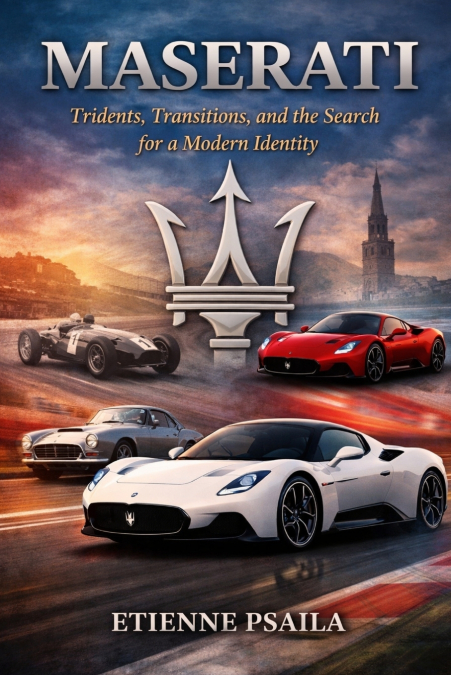
Maserati’s Trident has never stood still for long. From Bologna workshops and prewar racing paddocks to Modena production lines and today’s multi-brand corporate governance, the marque’s identity has been repeatedly rewritten-sometimes by vision, often by necessity.This book follows Maserati as both an engineering culture and a business case: how racing success built credibility, how grand tourers turned mythology into revenue, and how manufacturing realities in Italy’s Motor Valley shaped what the brand could reliably deliver. It also tracks the hard pivots-fuel crises, quality reputations won and lost, shifting export ambitions, and the constant tension between exclusivity and scale.Across ownership eras-family-led beginnings, industrial reorganization, state-influenced survival, and modern conglomerate strategy-the same question keeps returning: what does 'Italian luxury performance' mean when regulations tighten, platforms are shared, and electrification rewrites the definition of speed? Maserati’s answer has never been purely aesthetic. It has always been engineered, financed, negotiated, and fought for.