Shane Larson
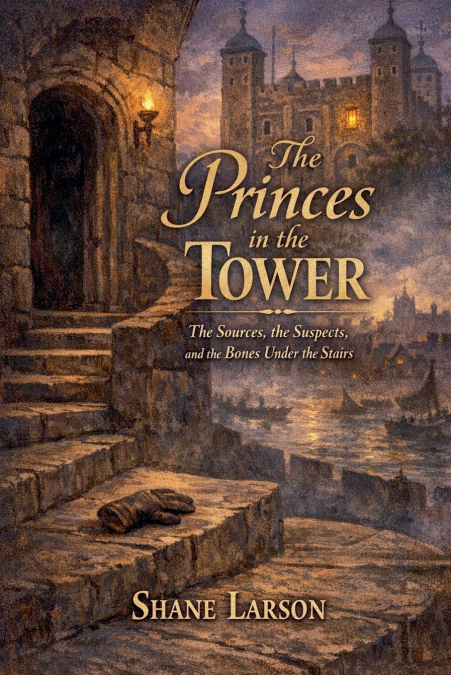
There is no contemporary record that the princes in the Tower were murdered. There is no contemporary record that they were not. The confession that is supposed to have settled it was announced in 1502, written up some thirty years after the event, and has never been seen.Edward IV died on 9 April 1483. His elder son, Edward, was twelve and king on the spot; his younger son, Richard, Duke of York, was nine. Within three months their uncle had custody of both, had lodged them in the royal apartments of the Tower of London, and had taken the throne himself. Over the summer the boys dropped out of sight. By October rebels in the south were saying they were dead; by January the Chancellor of France was saying it at Tours. No one who left a record ever saw them again.What survives is thin: about a dozen narrative sources, almost all written after the fact by men who were not inside the Tower, several of them with good reasons to say what they said; a few oddly shaped documents; and two children’s skeletons, dug out from under a staircase in 1674, sealed in a Wren urn in Westminster Abbey in 1678, and examined once, in 1933, with the science of 1933. They have never been DNA-tested.This book treats the case the way an honest investigator would. It puts every source on the table in the order it was written, so you can watch a rumour harden into a named story and then into marble. It then asks every suspect the same four questions: motive, opportunity, conduct afterwards, and the evidence against. Richard III. The Duke of Buckingham. Henry Tudor and Margaret Beaufort. Sir James Tyrell and the household men. And the possibility that one or both boys lived, the claim on which Perkin Warbeck built an eight-year career that cost Henry VII a fortune. It names its most likely answer in the Conclusion and shows the working.What you’ll learn:Who could see the boys, week by week, from April 1483 to the last plausible sighting, and why historians disagree about when that wasWhat Mancini, the Crowland continuator, Vergil and More each could actually have known, and what each wantedWhy Elizabeth Woodville’s March 1484 settlement with Richard is the most argued-over fact on either sideWhat Henry VII’s eight-year pursuit of Perkin Warbeck reveals about his own certaintyWhat the 1933 examination of the bones found and could not find, what radiocarbon and DNA could settle today, and which maternal line a test would actually needWhere a recent survival theory rests its case, and what its critics answerThis book is for you if:You want the evidence laid out fairly rather than a prosecution or a defenceYou read true crime and want the oldest open file in English history worked like oneYou have read Richard III or The Wars of the Roses on this shelf and want the question the first gave one chapterYou want to know what a DNA test on the urn could decide, and what it never couldTwo boys, last seen in the summer of 1483. Five suspects, one test. An urn that has not been opened in nearly a century, holding either the answer or someone else’s bones.